
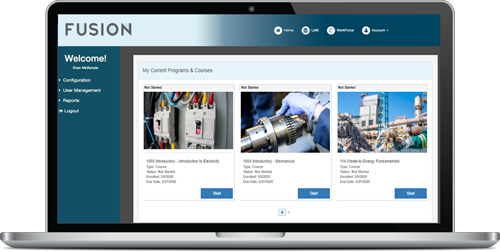
Waste-to-Energy Fundamentals
Covers fundamentals of waste combustion - characteristics and handling of MSW fuel, furnace designs, waste combustion, and plant operations.
TPC Training is accredited by IACET to offer 0.7 CEU for this program.
Lesson 1: Introduction to Waste Combustion
Topics
History of Waste Management; Benefits of Converting Waste to Energy; Environmental Regulations; The Clean Air Act; Current Guidelines; Permit Program; Reporting Procedures
Objectives
- Summarize the history of waste handling.
- List some problems associated with landfills and the benefits of waste-to-energy conversion.
- Name the federal regulations that apply to MWCs.
- Explain how NSPS regulations affect the operation of MWCs.
- Explain the permitting program.
Lesson 2: Characteristics of MSW Fuel
Topics
MSW Definitions; MSW Classification and Composition; MSW Handling Safety; MSW and Refuse-Derived Fuel; MSW Compared to Fossil Fuels
Objectives
- State the definition of MSW and list some kinds of waste excluded from MSW.
- Explain the various methods of classifying MSW.
- Discuss safety concerns related to the handling of MSW.
- Explain the differences between mass-burn MSW and RDF.
- Compare and contrast MSW and fossil fuels.
Lesson 3: MSW Handling
Topics
Solid Materials Flow Path; Weight Scale Operation; Tipping Floor and Refuse Pit; Receiving and Feeding Equipment; Front-End Conveyor Systems; Feed Systems; Ash Removal
Objectives
- Describe the MSW flow in a mass-burn and an RDF facility.
- Explain the responsibilities of the weight scale operator.
- Describe the tipping floor and refuse pit.
- Explain how odors are managed is an MSW facility.
- List typical receiving and feeding equipment and explain its functions.
- Describe how conveyors are used in a typical RDF facility.
Lesson 4: Furnace Designs
Topics
History of MWCs; MWC Designs; Mass-Burn Designs; Rotary Combustors; RDF Designs
Objectives
- Explain the impact of corrosion on MWC design.
- Describe mass-burn and RDF feed systems.
- Explain the operation of the following types of stokers: reciprocating grate, reversed reciprocating grate, oscillating grate, roller grate, and traveling grate.
- Define and contrast overfire air and underfire air and explain why the control of combustion air is important.
- Explain the advantages and disadvantages of a rotary combustor.
Lesson 5: Municipal Waste Combustion
Topics
The Combustion Process; Municipal Solid Waste as Fuel; Theoretical Air and Excess Air; Heating Value; Charging Rate; MSW Combustor Capacity; Combustion Temperatures; Reaction Rates; Air Pollution Control Equipment; Slag and Soot
Objectives
- Explain the combustion process as it occurs in a municipal waste combustor.
- Name the two main factors that determine feed rate.
- Define the terms theoretical air and excess air and tell why they are important.
- Explain the use of common air pollution control equipment and processes.
- Tell how soot and slag are formed and how they are removed.
Lesson 6: Ash Handling and Material Recovery
Topics
Characteristics of MSW Ash; Ash Safety and Handling Requirements; Ash Treatment and Testing Programs; Ash Transport and Loading Systems; Material Recovery
Objectives
- Describe the characteristics of MSW ash.
- Explain the safety considerations when handling MSW ash.
- List the major ash handling equipment.
- Describe the ash treatment and testing program.
- List the materials recovered from ash.
- List some potential uses for ash.
Lesson 7: Integrated Plant Operations
Topics
Principles of Plant Operation; Operator Training; Upset Conditions; Operating Procedures; Troubleshooting Concepts; Basic Plant Economics
Objectives
- State the main responsibilities of an MWC operator.
- Define the terms turnover, parameter, and walkdown as they relate to MSW operations.
- Explain the importance of operator training.
- Describe the three upset conditions in an MWC that can be dangerous to personnel and property.
- List the causes and symptoms of common MWC process problems.
- List the three sources of profit in a typical MWC.